

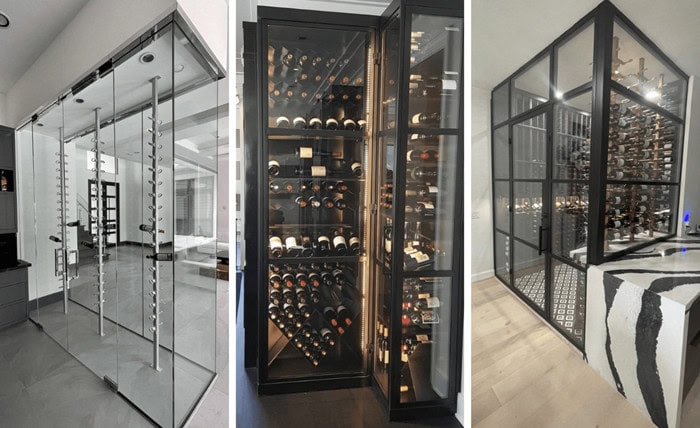
Why Glass Wine Walls Are Showing Up Everywhere
Walk into a newer luxury home or a high-end steakhouse and there’s a good chance the wine isn’t hidden in a basement anymore. It’s behind glass, lit from behind, and placed right where guests can’t miss it. Cellar builders now call glass enclosures one of the fastest-growing trends in the industry, and it’s easy to see why.
But a glass wine wall is also one of the trickiest wine storage projects to get right.
That’s not a reason to skip one. It’s a reason to understand the tradeoffs first, because most of the problems owners run into trace back to choices made in the first few weeks of design.
What Counts as a Glass Wine Wall?
The term gets used loosely. In most cases, it means a section of wall where bottles sit behind framed or frameless glass instead of being closed off in a separate room. Some are shallow, sealed enclosures with their own refrigeration. Others are racks set behind glass at room temperature, built more for showing bottles off than for aging them.
That difference matters more than almost anything else here. A refrigerated wall is really a small cellar with a glass face, while an unrefrigerated one is closer to furniture.
The Pros of Glass Wine Walls
Your Collection Becomes Part of the Design
A glass wall puts the wine where you actually live and entertain. Designers use them as room dividers, backdrops for dining tables, and feature walls that climb alongside a staircase. Heritage Vine, a custom cellar builder working across Arizona, California, New York and Connecticut, pairs these walls with label-forward racking and built-in LED backlighting, so each bottle reads almost like a framed object. Done well, the collection stops being storage and starts acting like architecture.
It Fits Where a Full Cellar Can’t
Not every home has room for a walk-in cellar. A wine wall can squeeze into a modest depth along an existing wall, under a stair, or between two rooms, which makes it realistic for condos and homes without basements.
You Can See What You Own
It sounds minor, but it isn’t.
When bottles are visible and well lit, you’re far less likely to forget one until it’s past its peak. Quick inventory checks take seconds instead of a trip downstairs with a flashlight, and you’ll spot a weeping cork or a leaning bottle sooner.
Restaurants Get a Built-In Selling Tool
In hospitality, a lit glass wall does real work. It signals the depth of a wine program before anyone opens the list. Heritage Vine’s commercial portfolio includes projects for Steak 48 in Beverly Hills and Peak at Hudson Yards in New York, and the company describes wine displays as a signature design element for dining rooms.
Possible Resale Appeal
In luxury markets, climate-controlled wine storage is often seen as a premium amenity. Just don’t expect it to pay for itself, since resale value depends heavily on the buyer and the local market.
The Cons of Glass Wine Walls
Glass Is a Weak Insulator
This is the big one. A framed cellar wall packed with insulation holds cold well, and glass simply doesn’t. Heritage Vine points out that frameless single-pane glass provides little to no insulation, and that upgrading to insulated glass improves performance considerably.
Why does that matter so much? Wine doesn’t just want to be cool. It wants to stay at one temperature. Wine Spectator’s guidance on keeping wine at a constant storage temperature ranks consistency above humidity, with a target of roughly 55 degrees Fahrenheit and ideally under 60, because swings make corks expand and contract and let air in.
Cooling Has to Be Engineered Around the Glass
Since the glass drives the heat load, the cooling has to be sized for it. Heritage Vine says it builds the added load from glass enclosures, including rooms with four glass walls, into its BTUH calculations, and it engineers the cooling for each space before making aesthetic decisions. The company then specifies equipment from brands like Wine Guardian, WhisperKool, CellarPro or LRC based on load, room shape and service access.
That order of operations is worth copying no matter who builds your wall. An undersized unit runs constantly, wears out early, and still lets temperatures drift.
Condensation
Cold glass and warm, humid room air don’t mix well. Once the glass surface drops below the room’s dew point, moisture forms and the panels fog. Left alone, persistent moisture can stain labels and damage nearby millwork or flooring.
Insulated glass, tight seals, and balanced humidity on both sides usually solve it. So does picking a sensible setpoint instead of chasing the coldest temperature possible.
Light Exposure
Ultraviolet light can harm wine over time, and bottles in clear or pale glass are the most vulnerable. Placement matters a lot here. A glass wall facing a sunny west window is a very different project from one in an interior hallway, though UV-filtering glass and low-heat LED lighting cut most of the risk.
Noise and Equipment Placement
Glass doesn’t hide sound, and a wine wall sits in your living space by design. According to Heritage Vine’s climate control information, through-the-wall units push some noise and heat into the next room, while split and ducted systems let the louder parts live somewhere else, like a garage or mechanical room.
That flexibility generally costs more up front.
A Higher Price Tag
Glass, hardware, engineered cooling and lighting all add up. For scale, Heritage Vine publishes indicative pricing that starts around $15,000 for wine walls and small cellars, with residential wine rooms running from roughly $30,000 to $150,000 or more. Those figures aren’t quotes, and your number will depend on size, glass and cooling.
Ongoing Upkeep
Glass shows fingerprints, dust and water spots. And the cooling system needs periodic service like any refrigeration equipment, which is easy to forget once the project wraps up.
What Most Pros and Cons Lists Miss
Plan for the room’s worst day, not its average one. A wall that holds 55 degrees on a mild evening might struggle on a July afternoon in Scottsdale, when sun hits nearby windows and the house AC is set back because nobody’s home. Seasonal and vacation homes are especially prone to this, since owners often raise the thermostat while they’re away. If the cooling was sized only for normal living conditions, that’s exactly when temperatures creep.
A good designer will ask about your thermostat habits, sun exposure, and how the room gets used. If they don’t, bring it up yourself.
Service access gets overlooked too.
Frameless glass looks clean partly because the equipment is hidden, but hidden equipment still needs inspections and repairs, so the design has to leave a practical way in. It’s one reason service access shows up on Heritage Vine’s list of factors when it chooses cooling equipment.
Is a Glass Wine Wall Right for You?
Generally speaking, it’s a strong fit if you want your wine on display, you’ll drink most of it within a few years, or you’re building a restaurant or bar where presentation helps sell bottles. It’s a tougher call if you’re aging high-value wine for decades and have room for a traditional insulated cellar. Plenty of collectors split the difference, keeping a glass wall for everyday bottles and a closed cellar for the long haul.
Not sure where you land? Start with how long your bottles need to last, then work backward from there.
Frequently Asked Questions
Do glass wine walls need refrigeration?
Only if you plan to store wine long term. A room-temperature display works for bottles you’ll open within weeks or months, but aging wine needs stable, cool conditions, usually around 55 degrees Fahrenheit. Without cooling, the wall is really a display piece.
How much does a glass wine wall cost?
It depends on size, glass type, racking and cooling, though Heritage Vine’s indicative pricing for wine walls and small cellars starts around $15,000 as one reference point.
What type of glass works best for a wine wall?
Insulated glass generally outperforms single-pane glass because it reduces heat transfer and condensation. Tempered safety glass is common for panels and doors, and UV-filtering coatings add light protection. Your local building code may also require safety glazing in certain locations.
Why does my glass wine wall fog up?
Fogging means the glass surface is colder than the dew point of the surrounding air, so moisture condenses on it; better insulated glass, tighter seals and lower room humidity usually fix it.
Are glass wine walls noisy?
They can be if the cooling unit vents into the living space. Split and ducted systems move the louder components elsewhere, which keeps the room much quieter.
Can you put a glass wine wall in a sunny room?
You can, but direct sun adds heat and UV exposure. UV-filtering glass, careful placement, and cooling sized for peak sun conditions all help. In hot climates, that last point is the one most worth paying attention to.