

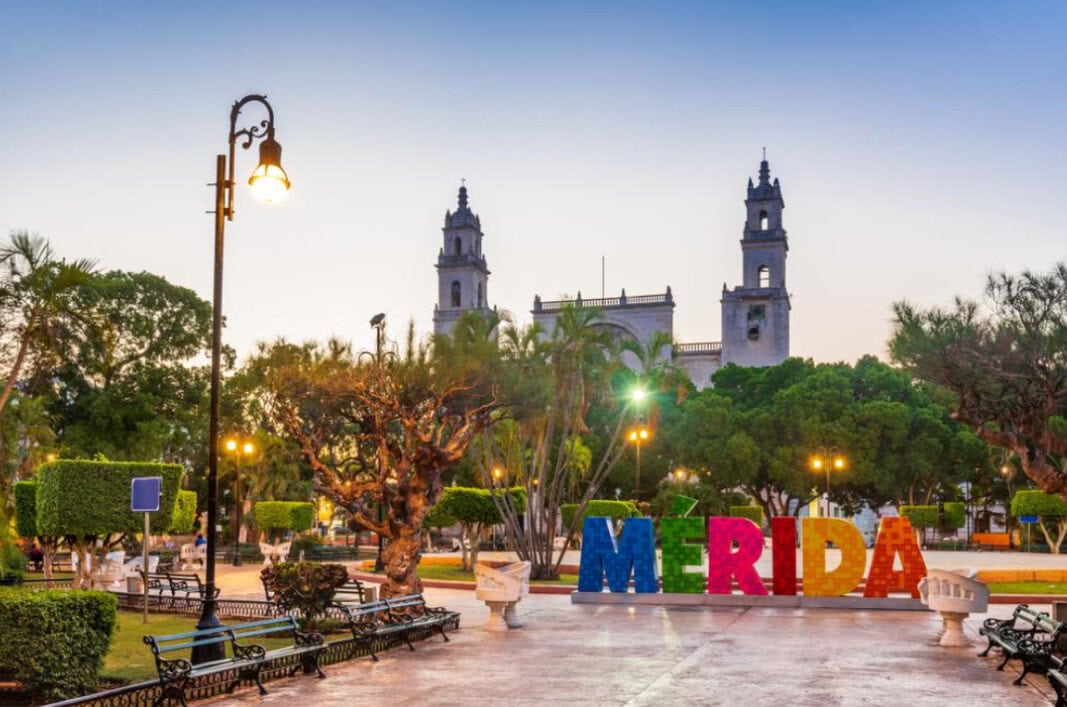
Flying from the US to Merida places you in the cultural center of Yucatán, where Maya heritage, colonial architecture, regional cuisine, and contemporary life remain closely connected. Known as the White City, Merida can be combined with cenotes, archaeological zones, restored haciendas, and smaller communities across the peninsula.
A useful first step is deciding which experiences deserve a full day outside the city. When comparing flights to Merida, consider staying at least five days; a full week provides a more comfortable pace for exploring Merida, Uxmal, Chichén Itzá, and a cenote or hacienda route.
Why Merida is gaining cultural attention
Merida offers an alternative to a resort-centered vacation while remaining a practical entry point to southeastern Mexico from the United States. Its historic center is relatively easy to explore, and the city provides access to some of the peninsula’s most important cultural and natural sites.
Maya culture remains present in language, food, crafts, family traditions, and surrounding communities. Spanish colonial architecture defines much of downtown, while the mansions along Paseo de Montejo recall the wealth generated by the henequen industry.
A well-paced Merida travel itinerary can combine:
- Architecture and museums within the city.
- Traditional markets and Yucatecan food.
- Archaeological zones reached on day trips.
- Cenotes and rural communities.
- Restored henequen haciendas.
Rather than using Merida only as a place to sleep between excursions, reserve time for its neighborhoods, public spaces, and evening atmosphere.
Paseo de Montejo and the historic center
Merida’s central districts are well suited to walking, although midday heat may require a slower schedule. Early mornings and late afternoons are generally more comfortable for outdoor routes.
Walking along Paseo de Montejo
Paseo de Montejo is a broad avenue lined with historic mansions, monuments, restaurants, and cultural spaces. Several residences reflect the economic power of families connected to the henequen boom of the late 19th and early 20th centuries.
You can begin near the historic center and continue north toward the Monumento a la Patria. Some mansions operate as museums or cultural venues, while others remain commercial or private properties. Check current access before planning specific interiors.
Exploring Plaza Grande
Plaza Grande anchors the historic center. Around it, you will find the Cathedral of San Ildefonso, Casa de Montejo, the Municipal Palace, and the Government Palace.
A central walking route can include:
- The Cathedral of San Ildefonso.
- Casa de Montejo.
- The murals inside the Government Palace.
- The Olimpo Cultural Center.
- Santa Lucía Park.
- The Lucas de Gálvez Market.
- Neighborhood churches and plazas beyond the main square.
Performances are frequently scheduled in public spaces, but programs change throughout the year. Review the official cultural calendar after arriving.
Understanding Maya heritage at the museum
The Gran Museo del Mundo Maya presents archaeological objects, historical materials, and contemporary perspectives on Maya communities. Its exhibitions help place the peninsula’s archaeological sites within a longer cultural history that continues today.
Confirm opening hours and exhibition access before making the trip. Allow enough time to read the interpretive material instead of treating the museum as a brief photo stop.
Cenotes, haciendas, and archaeological sites
Merida provides access to numerous excursions, but distance and heat make it impractical to combine several major sites in one day.
Swimming in cenotes
Cenotes are natural sinkholes formed within the peninsula’s limestone landscape. Some are open pools, while others are partially enclosed caves reached by stairs or platforms.
Before choosing one, confirm:
- Whether swimming is permitted.
- If life jackets are required.
- Whether lockers and changing areas are available.
- If transportation is included.
- Whether sunscreen or other products are restricted.
- How physically demanding the entrance may be.
Use established facilities or a qualified local guide, particularly when a cenote is located on private or community-managed land.
Visiting Henequen haciendas
Henequen shaped the regional economy and landscape, leaving behind estates, processing facilities, rail systems, and worker settlements. Some former haciendas now operate as museums, hotels, restaurants, or event spaces.
Their history should include the labor systems and social inequality associated with the industry, not only the architecture. A guided visit can provide useful context about how these estates functioned.
Choosing between Uxmal and Chichén Itzá
Uxmal and Chichén Itzá are UNESCO World Heritage sites, but they represent different architectural traditions and require separate day trips.
Uxmal is known for Puuc architecture, including detailed stone mosaics, the Pyramid of the Magician, the Nunnery Quadrangle, and the Governor’s Palace. Its location also makes it possible to explore other places along the Puuc Route.
Chichén Itzá contains structures associated with several historical periods and cultural influences, including El Castillo, the Great Ball Court, and the Temple of the Warriors. It requires a longer journey from Merida and can become busy, making an early departure advisable.
For either site:
- Bring water, sun protection, and comfortable shoes.
- Review current opening hours and ticket policies.
- Avoid relying on outdated information about climbing structures.
- Consider hiring an authorized guide for historical context.
- Leave enough time for the return trip.
The flavors of Yucatán
Yucatecan cooking reflects Maya ingredients and techniques alongside later Caribbean, European, and Middle Eastern influences. Achiote, sour orange, corn, habanero chile, pumpkin seeds, and slow cooking appear throughout the regional repertoire.
Essential dishes to try
- Cochinita pibil: pork marinated with achiote and sour orange, traditionally wrapped in banana leaves and cooked slowly.
- Sopa de lima: a seasoned broth with poultry, citrus, and crisp tortilla strips.
- Panuchos: fried tortillas filled with black beans and topped with meat, pickled onion, and other accompaniments.
- Papadzules: tortillas filled with egg and served with pumpkin seed sauce.
- Queso relleno: Edam cheese filled with seasoned meat and served with sauces.
- Relleno negro: meat cooked in a dark recado made with charred chiles and spices.
Markets, neighborhood restaurants, and traditional kitchens offer different interpretations of these dishes. Ask for habanero sauces on the side if you are uncertain about the heat level.
Practical advice for your trip
When to visit
November through March generally brings lower humidity and more comfortable conditions for walking and archaeological excursions. This is also a popular period, so accommodations and guided activities may require advance reservations.
April and May can be especially hot. The rainy season usually extends through summer and early fall, often bringing afternoon storms. Heat remains possible throughout the year, making hydration and sun protection essential.
How to get around
- Historic center: walk when the distance and temperature permit.
- Trips within the city: use authorized taxis, app-based rides, or local transportation.
- Archaeological sites: choose a rental car, regional bus, private transfer, or organized excursion.
- Cenotes and haciendas: confirm transportation before departure because some locations are difficult to reach without a car.
- Airport transfers: arrange authorized transportation and allow time for traffic.
A rental car provides flexibility, but you should account for parking, tolls, road conditions, and limited services on some rural routes.
Shutterstock
How to organize the flight
Booking airfare in advance generally provides more departure dates and schedule options from the United States, particularly between November and March. Early planning also makes it easier to coordinate accommodations and transportation to rural sites.
Carry a valid passport, review current Mexican entry requirements, and confirm museum and archaeological-site hours shortly before departure.
Where the White City opens onto Yucatán
Merida deserves time both as a destination and as a base for exploring the peninsula. Its plazas, museums, food, and architecture provide context for the cenotes, haciendas, and ancient cities beyond its urban limits. With a balanced itinerary, flying from the US to Merida becomes an introduction to a living culture rather than a sequence of disconnected day trips.