

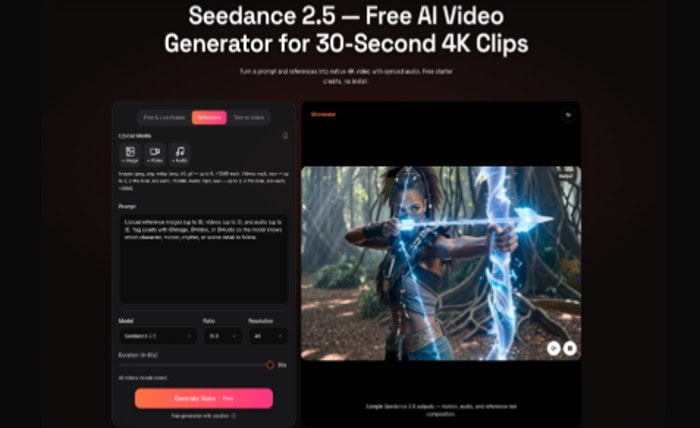
The AI video industry has moved quickly over the past year. New models are appearing more frequently, creators are experimenting with increasingly complex workflows, and businesses are beginning to integrate AI-generated video into everyday marketing.
Against this backdrop, one upcoming release has attracted growing attention:Seedance 2.5.
Although the model has not been fully released at the time of writing, discussions around Seedance 2.5 have already become common across AI communities, creator forums, and social media. Rather than focusing on hype, many creators are asking a more practical question:
How should we prepare before the model arrives?
Why Seedance 2.5 Is Receiving So Much Attention
Every major AI video release raises expectations, but Seedance 2.5 is attracting interest for several reasons.
First, the AI video market has become far more competitive. Creators no longer evaluate models based on a single impressive demo. They look at workflow efficiency, consistency, controllability, and how well a model fits into real production pipelines.
Second, AI-generated video is no longer limited to experimentation. Marketing teams, independent creators, agencies, educators, and startups are all looking for tools that can shorten production time while maintaining quality.
For many people, the next generation of AI video models represents an opportunity to improve existing workflows rather than replace them.
The Market Is Looking Beyond Features
When a new model is announced, conversations often focus on expected features.
People speculate about:
- Better prompt understanding
- More consistent character generation
- Improved camera control
- Longer video duration
- Higher visual quality
- Faster generation
Those improvements certainly matter.
However, experienced creators usually ask a different question:
Will this model actually improve my daily workflow?
A slightly better video means very little if projects still require dozens of prompt revisions or repeated manual adjustments.
This is why workflow has become just as important as model capability.
Why Preparation Matters Before Launch
One interesting trend within the AI creator community is that many people are preparing their creative assets before trying a new model.
Instead of waiting for release day, they are organizing:
- Prompt libraries
- Reference images
- Character sheets
- Style references
- Story templates
- Product photography
- Camera movement notes
This preparation makes it much easier to evaluate a new model objectively.
Rather than writing completely new prompts, creators can compare outputs using familiar materials and identify what has actually improved.
The Rise of Prompt Management
Prompt engineering has gradually evolved into prompt management.
Many experienced creators now maintain organized libraries containing:
- Frequently used prompts
- Camera movement instructions
- Lighting descriptions
- Negative prompts
- Style references
- Successful project templates
These libraries save time and create more consistent results across different projects.
As new models appear, the library becomes even more valuable because it provides a stable foundation for testing and refinement.
Why Workflow May Matter More Than the Model
It is tempting to believe that every new AI release will dramatically improve creative output.
In reality, most productivity gains come from combining a capable model with an organized workflow.
For example, creators who already maintain:
- reusable prompts,
- organized reference assets,
- version histories,
- structured project folders,
are often able to evaluate new models much faster than those starting from scratch.
The model may change, but a well-designed workflow continues to deliver value over time.
What Creators Are Watching
As discussions around Seedance 2.5 continue, several topics appear repeatedly within creator communities.
Many people are interested in:
- How consistently characters remain across scenes.
- Whether prompt interpretation becomes more reliable.
- How camera movements respond to detailed instructions.
- The quality of image-to-video generation.
- Support for longer storytelling sequences.
- Integration into existing production workflows.
These are practical questions that directly affect creators’ daily work.
Preparing a Practical Workflow
One lesson that many creators have learned over the past year is that preparation often matters more than immediate adoption.
Before testing any new AI video model, it helps to prepare:
- reusable prompt templates;
- categorized reference images;
- visual style libraries;
- project checklists;
- reusable scene structures;
- evaluation criteria for comparing results.
This approach makes testing more efficient and produces more meaningful comparisons.
Building a Seedance 2.5 Prompt Guide
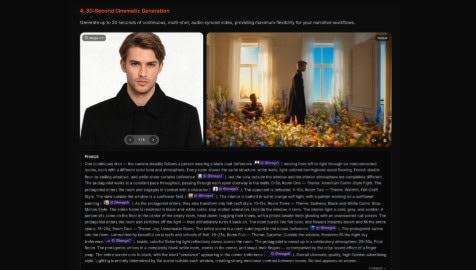
Another useful preparation is creating a personal Seedance 2.5 prompt guide.
Rather than collecting random prompts, organize them by creative purpose.
For example:
- Product marketing videos
- Social media ads
- Cinematic storytelling
- Character animation
- Camera movement
- Lighting setups
- Visual consistency
- Prompt troubleshooting
A structured guide allows creators to reuse successful ideas instead of beginning every project with an empty page.
As AI models continue to improve, this kind of documentation becomes a long-term creative asset rather than something tied to a single release.
Looking Beyond the Launch
Whenever a new AI model approaches release, excitement naturally builds.
Yet history shows that the creators who benefit most are not always those who test a model first.
They are often the ones who have already prepared their workflows, organized their creative resources, and established repeatable production processes.
Whether Seedance 2.5 introduces significant improvements or more incremental changes, those preparations will continue to pay off long after launch day.
Final Thoughts
The AI video industry is evolving rapidly, and every major release adds another piece to an increasingly competitive landscape.
Seedance 2.5 has become one of the most closely watched upcoming models, not simply because it is new, but because creators are looking for practical improvements that fit real production needs.
While everyone is waiting to see what the release will bring, now may be the best time to prepare the assets, prompts, and workflows that will make those new capabilities easier to use when they arrive.