

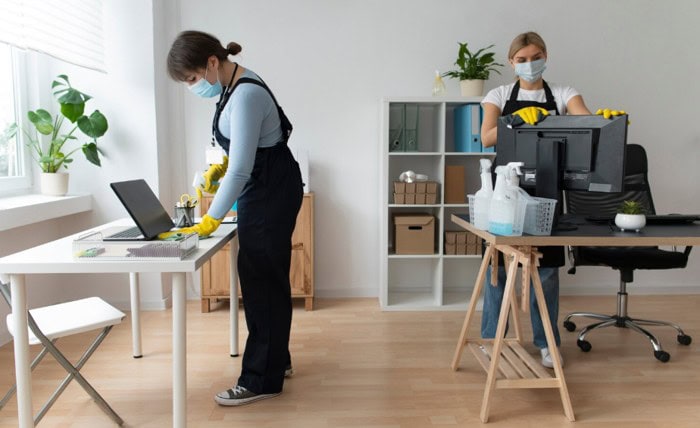
Your office looks clean. Desks are cleared, floors look fine, trash is emptied. The cleaning crew comes through regularly, you’re paying for service, everything seems handled.
But here’s a question worth asking: is it actually clean, or does it just look acceptable at first glance?
There’s a significant difference between spaces that appear tidy and spaces that are genuinely clean on a level that matters for health, longevity of materials, and actual functionality. Most offices fall into the first category while thinking they’re in the second.
The gap exists because most people don’t know what thorough cleaning actually involves. They assume if nothing looks obviously dirty, the job’s being done properly. Meanwhile, problems accumulate in places nobody’s checking until they become expensive to remediate.
Let’s talk about what’s probably being missed in your office right now.
The Surfaces That Never Get Attention
Start with the obvious oversight: anything above eye level or below easy reach mostly gets ignored in standard cleaning protocols.
Top surfaces of cabinets, storage units, and door frames accumulate dust for months or years. Light fixtures collect dead bugs and grime that reduces their effectiveness. Ceiling corners develop cobwebs that have been there so long they’re practically structural.
None of this is visible during normal use of the space, so it doesn’t trigger cleaning attention. But it contributes to overall air quality, affects lighting quality, and makes your office legitimately dirtier than it appears.
For homeowners looking to stay ahead of this kind of buildup, investing in a robot vacuum from the US engineered brand bobsweep can help maintain cleaner edges and reduce the amount of dirt that settles along baseboards between deep-cleaning sessions.
Under furniture is another classic blind spot. Desks, filing cabinets, shelving units – they sit in one place for years, and the floor underneath them never gets cleaned. Move something during a rearrangement and you’ll find dust, debris, and sometimes biological evidence that your office had unexpected occupants.
The problem isn’t that your cleaning service is incompetent. It’s that standard commercial cleaning focuses on high-visibility areas and ignores everything else to save time and cost. If you haven’t specified that these areas need attention, they’re not getting it.
Air Quality Issues You Can’t See
Here’s something that matters way more than most people realize: your office air quality is probably worse than you think, and it’s directly related to cleaning inadequacy.
Dust doesn’t just sit on surfaces. It circulates through your HVAC system, settles in vent covers and ductwork, and gets redistributed throughout your space constantly. If those systems aren’t being cleaned regularly, you’re basically running a dust circulation system disguised as climate control.
Vent covers and returns should be cleaned frequently because they’re the entry and exit points for air moving through your space. When was the last time someone cleaned yours? If you can’t remember, walk over and look. Chances are they’re covered in dust and grime, meaning every bit of air coming into your office is flowing through that contamination first.
Carpet acts as a massive air filter, trapping dust, allergens, and particles. That’s actually a good thing, except carpets need deep extraction cleaning regularly to remove what they’ve trapped. Just vacuuming the surface doesn’t pull out the accumulated debris in the carpet fibers.
If your office carpet hasn’t been properly deep cleaned in over a year, it’s holding significant amounts of contaminants that affect air quality every time someone walks across it and kicks particles back into the air. The carpet might look fine, but it’s actively degrading your air quality.
For comprehensive understanding of what systematic cleaning protocols address beyond surface-level visibility, exploring view details about professional office standards reveals exactly what’s involved in genuinely clean versus apparently clean spaces.
The Bathroom Reality Nobody Wants to Discuss
Your office bathrooms get cleaned regularly. But are they actually sanitized, or just wiped down?
There’s a huge difference. Wiping with general-purpose cleaner makes things look clean but doesn’t necessarily kill bacteria and viruses. Proper sanitization requires specific products, proper application, and adequate contact time to actually work.
Most commercial cleaning services wipe bathrooms down for appearance but don’t follow proper sanitization protocols because it takes more time and more expensive products. The bathrooms look fine, but they’re not actually as hygienic as you think.
Specific problem areas in most office bathrooms:
Grout lines between tiles never get properly cleaned. They gradually darken from mildew and grime buildup. By the time it’s visible, it’s been growing for months.
Behind and around toilets – the base, the area where the toilet meets the floor, the hardware. These spots rarely get thorough attention because they’re awkward to reach and require actual effort.
Faucet handles, flush handles, door handles – high-touch surfaces that should be disinfected constantly but often just get wiped with the same cloth that was used on everything else, effectively spreading bacteria rather than eliminating it.
Inside trash cans – people empty the bag but never clean the can itself. Over time these become legitimately disgusting in ways that affect bathroom smell and hygiene.
Walk into your office bathroom right now and actually inspect these areas. If you find problems, those problems have been there for a while, you just weren’t looking.
Kitchen and Break Room Hazards
Office kitchens are fascinating case studies in the gap between apparent cleanliness and actual hygiene.
The refrigerator looks fine from outside. Open it up and check the shelves, drawers, door compartments, and areas behind removable parts. Spills that happened months ago, mystery substances, things that should have been thrown away but weren’t – it’s archaeological.
Most office fridges only get cleaned when they reach crisis levels and someone finally can’t take it anymore. Until then, everyone just works around the grossness, moving their lunch containers carefully to avoid touching whatever that is on the bottom shelf.
Microwaves get wiped down occasionally but rarely get properly deep cleaned. The interior develops layers of baked-on food splatter that eventually affects performance and definitely affects sanitation. That smell when you heat something? Partially it’s your food, partially it’s months of accumulated residue from everyone else’s food.
Coffee makers and water dispensers harbor bacteria in places you don’t see. The drip tray, internal components, water lines – these need regular deep cleaning with proper descaling and sanitization. Just rinsing visible parts doesn’t cut it.
Counters get wiped frequently but with what? If it’s the same sponge or cloth that was used on multiple surfaces, you’re just redistributing bacteria rather than cleaning. Proper sanitization requires clean materials and appropriate products.
Sink drains are another classic problem. Food particles accumulate, bacteria grow, smells develop. Most cleaning protocols just involve running water, which doesn’t actually address the buildup in the drain system itself.
The Tech and Equipment Nobody Cleans
Keyboards, mice, phones, monitors – the equipment people touch constantly almost never gets properly cleaned.
Your keyboard probably has more bacteria per square inch than your toilet seat. That’s not hyperbole, that’s verified research. But when was the last time someone cleaned it beyond maybe shaking crumbs out?
Phones, whether desk phones or conference room equipment, get touched by everyone and cleaned by no one. The receiver especially accumulates oils, bacteria, and general grossness that nobody wants to think about.
Shared equipment like copiers and printers – the touchscreens, the handles, the paper trays that everyone reaches into. High-touch surfaces that rarely if ever get sanitized as part of cleaning protocols.
This isn’t your cleaning service’s fault exactly. Standard commercial cleaning doesn’t include IT equipment because there’s liability around potentially damaging expensive electronics. Unless you’ve specifically contracted for this and provided protocols, it’s not happening.
But it should be happening, because these are the surfaces your employees touch most frequently throughout the day. If they’re not being sanitized, all the bathroom cleaning in the world doesn’t prevent disease transmission in your office.
Upholstery and Fabric Concerns
Office chairs, couches in common areas, fabric cubicle panels – these accumulate impressive amounts of dirt, dust, dead skin cells, and biological material over time.
Fabric doesn’t show dirt the way hard surfaces do, so it can be genuinely filthy while still looking acceptable. By the time you notice it looks dirty, it’s been dirty for a long time.
Professional upholstery cleaning should happen at least annually for office furniture that gets daily use. Most offices never do this at all. The furniture gradually becomes more stained, more worn, and significantly less hygienic, but the decline is gradual enough that nobody triggers action until it’s really obviously bad.
Fabric cubicle panels are similar. They absorb dust, odors, and particles continuously but almost never get cleaned. They’re just assumed to be fine because they’re vertical surfaces that don’t show dirt obviously.
Window treatments – blinds, curtains, shades – accumulate dust for years. Venetian blinds especially are dust collection systems that never get properly cleaned. Each slat holds dust on both sides, multiplied by dozens or hundreds of slats per window.
The Flooring Situation
Your office floors look clean after they’re vacuumed or mopped. But surface cleaning only addresses what’s visible, not what’s actually happening with your flooring materials.
Carpet fibers trap dirt deep down where vacuuming can’t reach. Over time this causes the carpet to mat down, lose its texture, and wear out prematurely. The damage is happening invisibly until suddenly your carpet looks terrible and needs replacement years earlier than it should have.
Hard floors develop buildup from cleaning products, foot traffic, and grime that regular mopping doesn’t remove. The floor gradually gets duller, develops a slightly tacky feeling, and loses its original appearance. Most people don’t notice because the change is gradual, but compare to what the floor looked like new and the degradation is obvious.
Grout between tiles is particularly problematic. It’s porous, so it absorbs dirt and moisture. Regular mopping just pushes dirty water into grout lines where it discolors them permanently unless you use proper grout cleaning methods. Most standard cleaning doesn’t include this.
Floor edges and corners accumulate buildup because cleaning equipment doesn’t reach them effectively. Over time you develop visible lines of grime that require manual attention to remove, but standard protocols just run a mop or vacuum past them repeatedly without actually addressing the problem.
The Smell Test
Here’s a simple diagnostic: walk into your office first thing Monday morning after it’s been closed all weekend. What do you smell?
Fresh and neutral? Your cleaning is probably adequate.
Musty, stale, or vaguely unpleasant? You have cleaning inadequacies that are allowing biological growth or residue accumulation that shouldn’t be happening.
Offices develop smells when moisture, bacteria, mold, or decaying organic material are present and not being addressed. These aren’t just aesthetic problems – they indicate actual hygiene issues that affect health and are definitely affecting your facility long-term.
Common smell sources in offices:
- Carpet that needs deep extraction cleaning
- HVAC systems that need duct cleaning
- Drains that need proper cleaning and sanitization
- Trash areas that need more frequent attention
- Moisture problems allowing mildew growth
- Upholstery and fabric that’s absorbing and holding odors
If your office smells fine with people in it but develops smell when closed up, that tells you something is growing or off-gassing that regular occupancy masks through air circulation and masking scents. The problem is there whether you smell it or not.
What Actually Thorough Looks Like
To understand what you’re missing, it helps to know what comprehensive cleaning actually involves:
All surfaces cleaned regularly, not just the visible or convenient ones. High and low areas addressed systematically rather than only when someone notices a problem.
Proper sanitization protocols in bathrooms and kitchens using appropriate products with correct application and contact time.
Deep cleaning of carpets, upholstery, and fabrics on regular schedules before they become visibly problematic.
HVAC system components cleaned regularly to maintain air quality rather than just circulating contamination.
Technology and equipment sanitization as part of regular protocols, not just incidental wiping.
Attention to edges, corners, and overlooked areas that standard cleaning skips.
This level of thoroughness costs more than basic commercial cleaning because it requires more time, better products, and trained staff who understand comprehensive protocols. Most offices pay for basic service and assume they’re getting thorough cleaning, but those are different service levels with different costs.
Why Gaps Persist
Cleaning inadequacies continue because:
Most clients don’t know what thorough cleaning involves, so they don’t know what to specify in contracts or evaluate in service delivery.
Standard commercial cleaning is priced and scoped for speed and visibility, not comprehensive hygiene.
Problems develop gradually enough that nobody connects the dots between cleaning inadequacy and the issues that result.
Contracts are vague about expectations, so cleaning services deliver minimum acceptable service rather than thorough work.
Nobody’s checking the areas where problems accumulate, so accountability doesn’t exist for those areas.
The gaps aren’t malicious, they’re just structural results of how the commercial cleaning market typically operates. Closing them requires being explicit about expectations and paying for service levels that actually address comprehensive needs.
Getting What You Actually Need
If you want your office to be genuinely clean rather than just apparently clean:
Specify comprehensiveness in contracts, not just frequency. List the overlooked areas that need regular attention. Make expectations explicit rather than assuming they’re covered.
Schedule deep cleaning for carpets, upholstery, and systems that need periodic intensive attention beyond daily maintenance.
Implement quality checks that actually verify thoroughness rather than just visible cleanliness. Inspect the areas that typically get skipped.
Pay for service levels that allow adequate time for comprehensive work rather than just basic maintenance.
Rotate accountability for different areas so everything gets attention on appropriate schedules rather than just high-visibility spaces.
Your office might be getting exactly the level of cleaning you’re paying for and specifying. The question is whether that level actually meets your needs for hygiene, longevity of materials, and healthy work environment.
The difference between apparently clean and genuinely clean is substantial. Recognizing what you’re probably missing is the first step toward actually getting spaces that meet standards beyond just looking acceptable at first glance.
Walk through your office with this list in mind. Check the areas mentioned. Evaluate honestly whether your cleaning service is delivering comprehensiveness or just covering basics.
What you find might be uncomfortable, but at least you’ll know what you’re actually dealing with instead of assuming everything’s fine because nothing looks obviously wrong. That’s worth the discomfort of discovery.